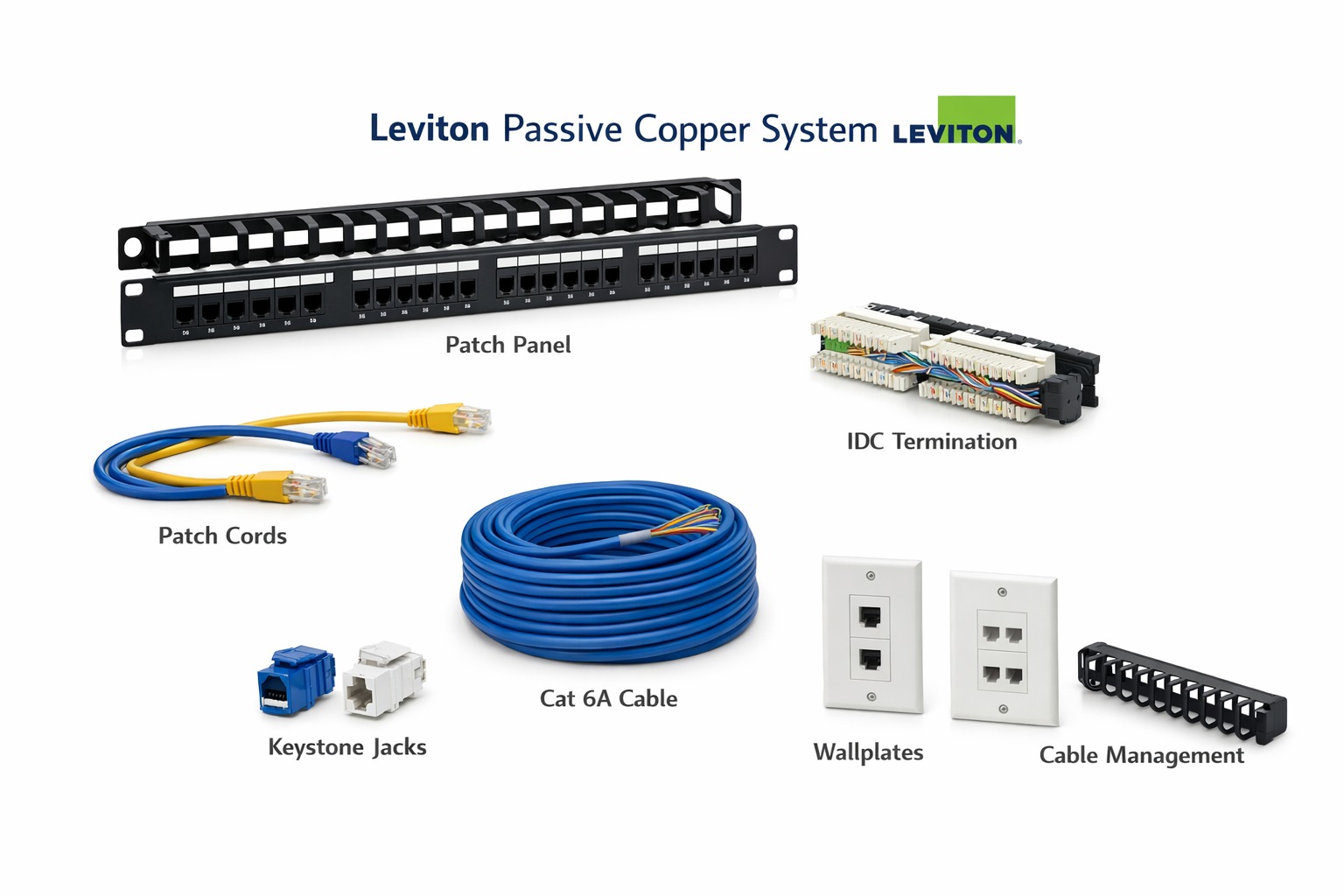
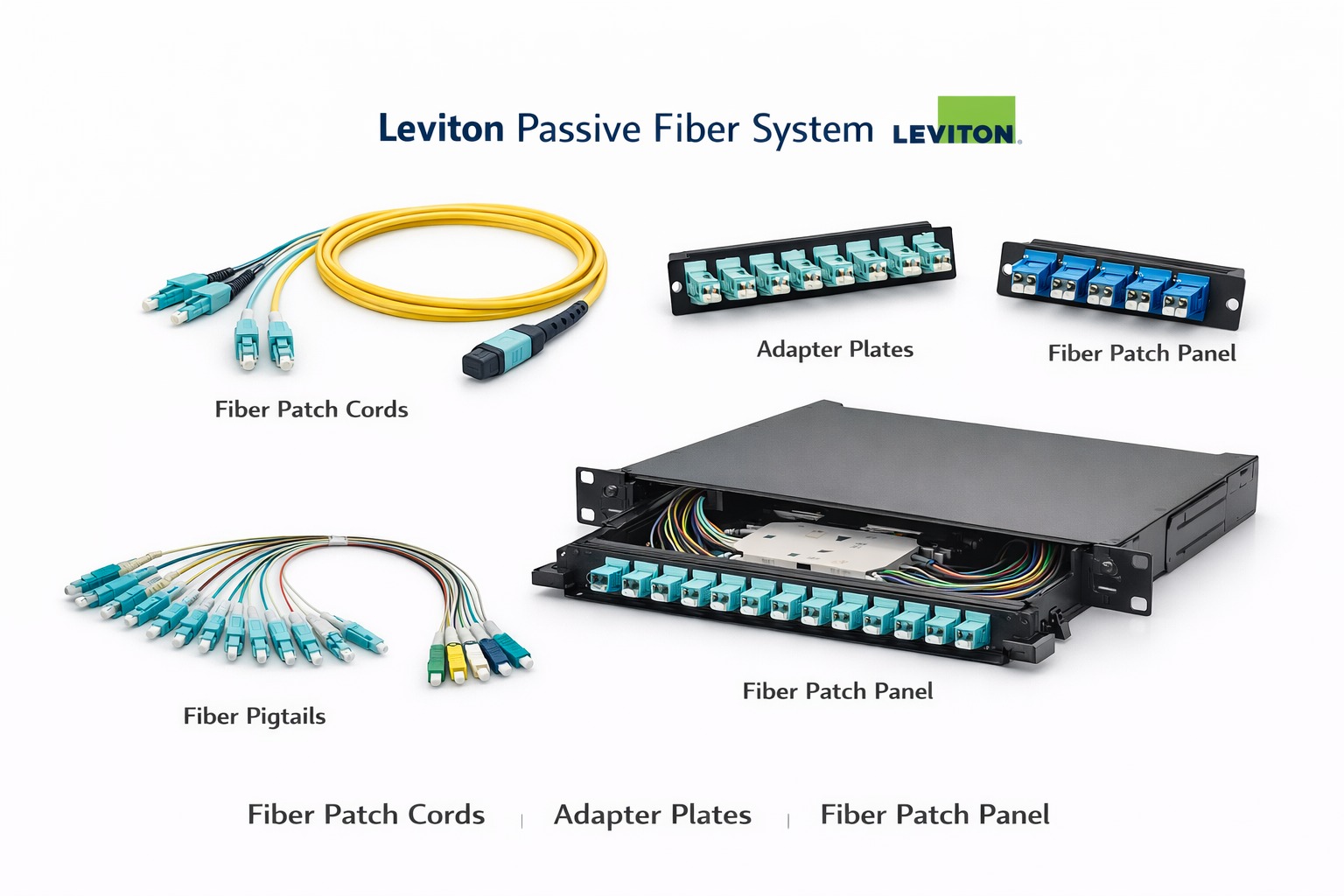
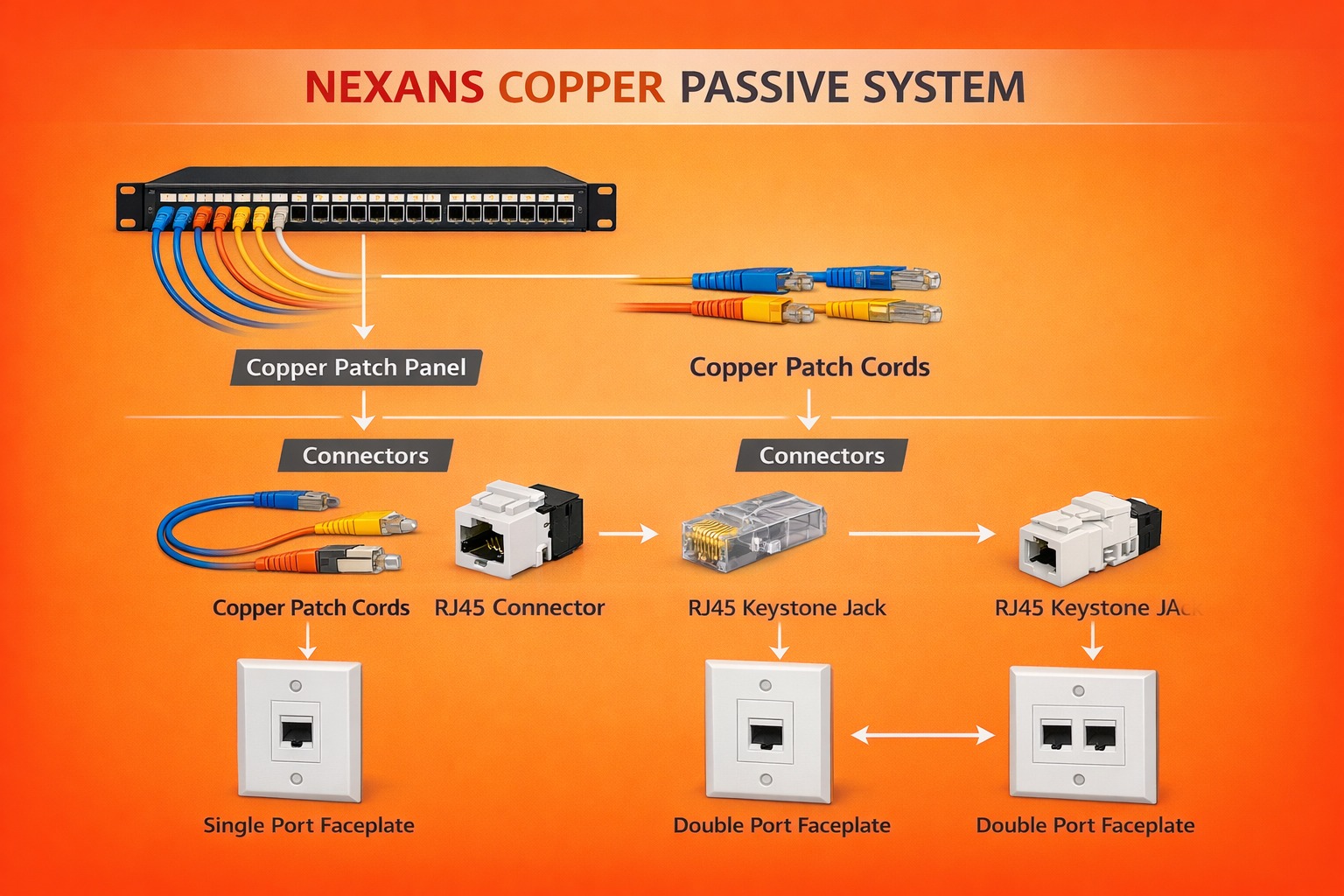
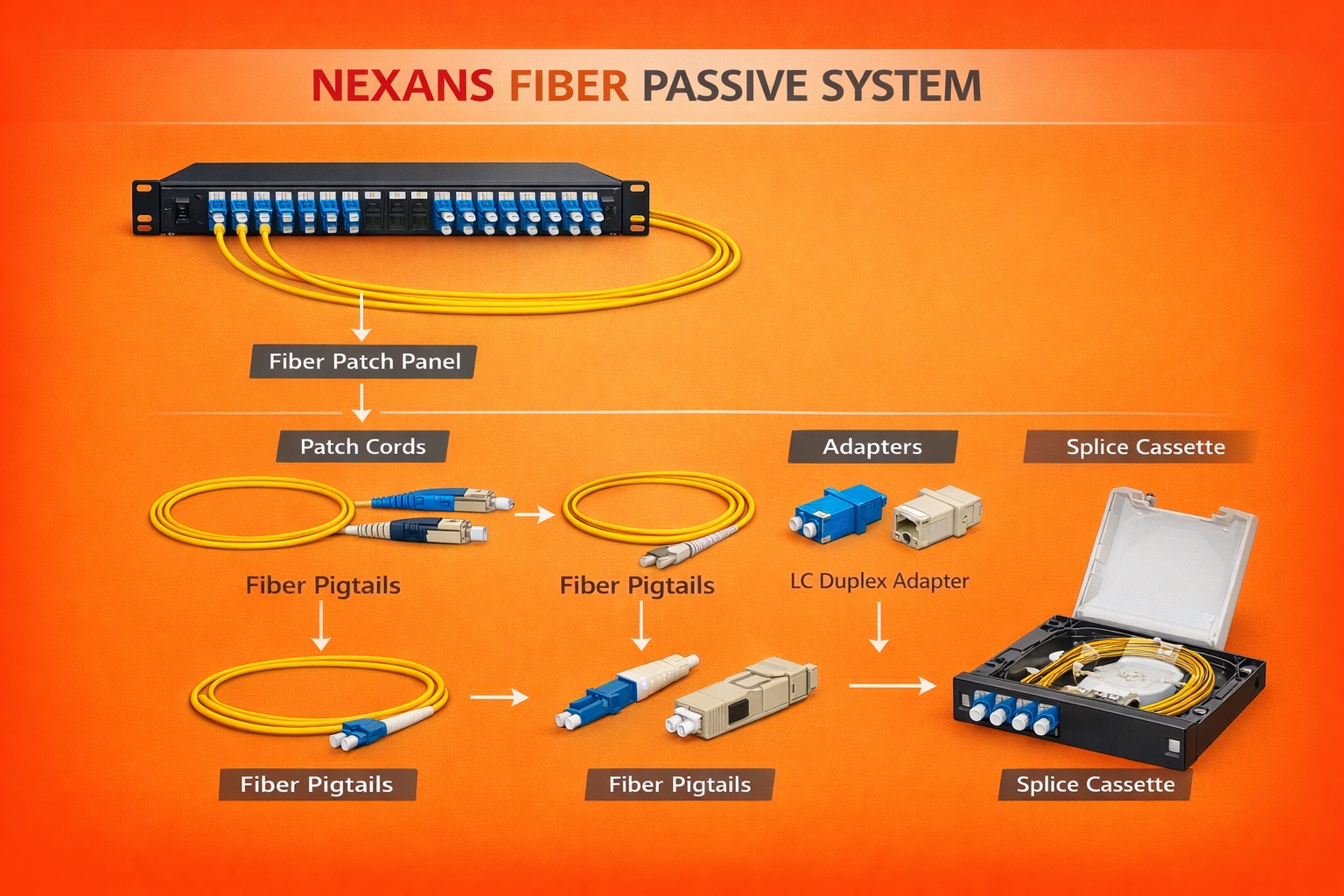
Data Network Passive Systems are essential components of modern IT infrastructure in offices, factories, smart buildings, and commercial projects. Data network cables form the backbone of these systems, ensuring high-speed data transmission, network stability, and reliable connectivity.
A Passive Network System includes all network components that do not require electrical power to operate, such as:
Patch panels
Face plates
Racks
Keystone jacks
Among these components, data cables play the most critical role in transmitting information between network devices.
Cat5e Cables: Suitable for basic networks up to 1Gbps.
Cat6 Cables: Higher performance with reduced interference.
Cat6A Cables: Support up to 10Gbps over longer distances.
Fiber Optic Cables: Ultra-high speed and long-distance data transmission.
Stable and fast data transmission.
Reduced signal loss and electromagnetic interference (EMI).
Improved overall network performance.
Easy scalability for future upgrades.
Excellent insulation against EMI.
Compliance with international standards such as ISO and ANSI/TIA.
Long service life with consistent performance.
Support for data, voice, and video applications.
Corporate offices and business centers.
Data centers.
Hospitals and educational institutions.
Hotels and shopping malls.
Industrial facilities and smart buildings.
When selecting a data network cable, consider:
Required data speed and bandwidth.
Application type (Internet, VoIP, CCTV, Data).
Installation environment (indoor or outdoor).
Shielding requirements.
Compliance with recognized standards.
 VFD Cables
 Solar Cables
 Rubber Cables
 Pair Cables
 Data Network Passive System
 Multi Core Cables
 Marine Cables
 LSZH Cables
 Fire Resistent Cables
 Industrial Cables
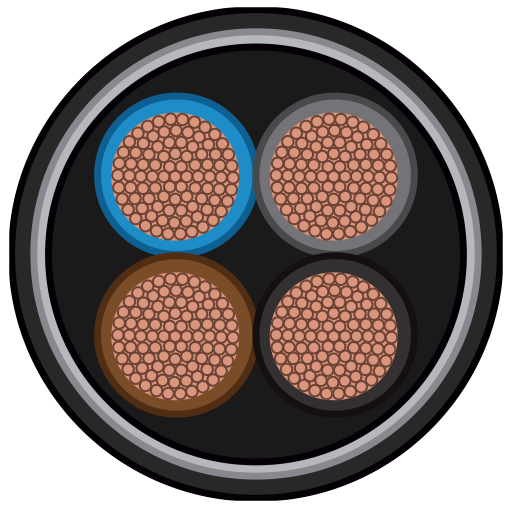 Fire Alarm Cable
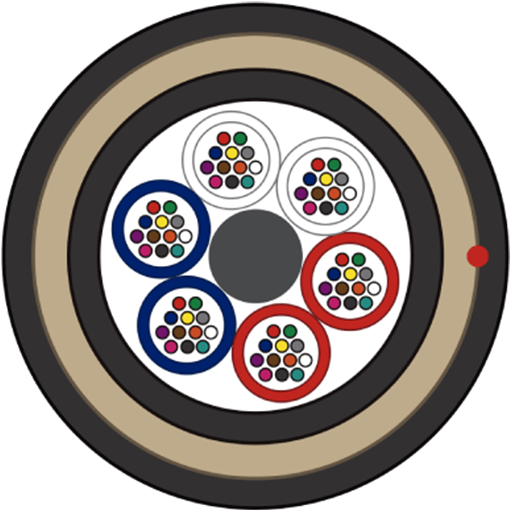 Fiber Optic Cables
 Data Cable
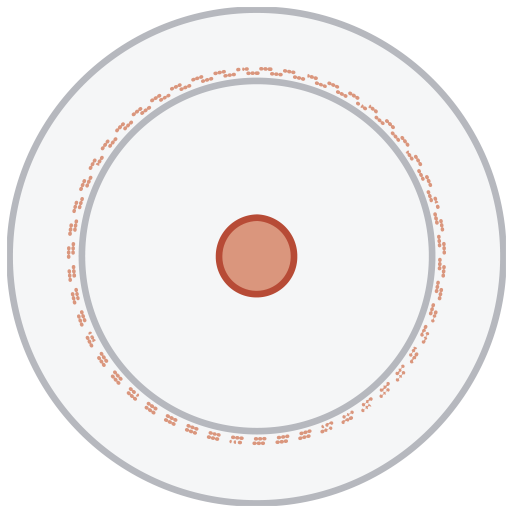 Coaxial Cables